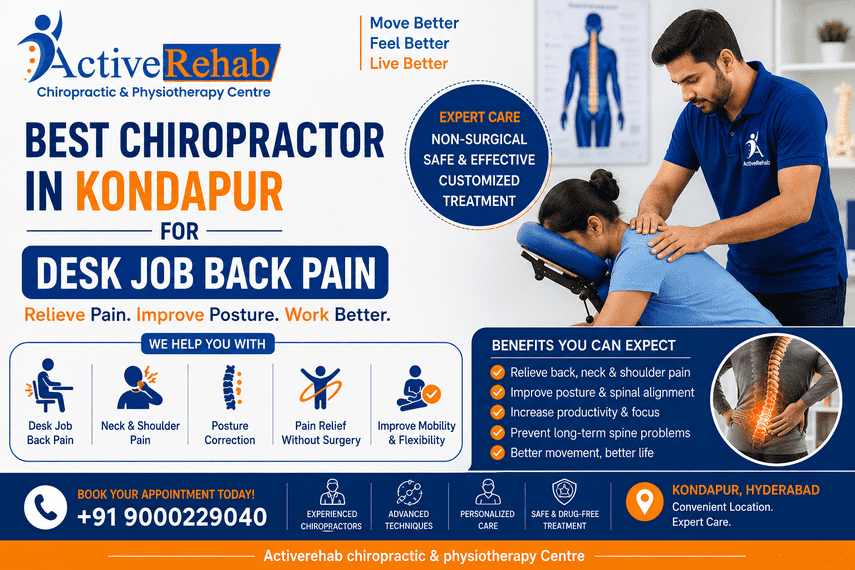
If you spend several hours sitting at a desk and regularly experience lower back pain, stiffness, or discomfort while working, your workstation, posture, muscle weakness, and movement habits may be contributing to the problem.
At Active Rehab Chiropractic & Physiotherapy Centre in Kondapur, Dr. Ashok P. Kota provides personalized chiropractic care, physiotherapy, posture correction, and rehabilitation for desk-job-related back pain. The goal is to improve movement and function while addressing contributing factors rather than simply masking pain.
Desk Job Back Pain Is More Common Than You Think
Long hours at a computer can place continuous stress on the lower back and surrounding muscles.
Office professionals may spend 8 or more hours sitting, often with limited movement between work tasks. Over time, this can contribute to:
- Lower back pain
- Muscle stiffness
- Poor posture
- Hip tightness
- Reduced flexibility
- Neck and upper-back tension
- Difficulty standing after prolonged sitting
- Recurrent back pain
ActiveRehab already addresses work-related and chronic back pain through chiropractic care, physiotherapy, posture correction, and rehabilitation.
Why Does Sitting Cause Back Pain?
Sitting itself is not necessarily harmful. The problem is usually prolonged, repetitive sitting combined with poor ergonomics and insufficient movement.
Common contributors include:
Poor Sitting Posture
Slouching or leaning forward can increase mechanical stress on the spine.
Incorrect Chair Height
A chair that is too high or too low can affect pelvic and spinal positioning.
Poor Monitor Position
Looking down at a laptop for extended periods may contribute to neck and upper-back strain.
Lack of Movement
Remaining in the same position for hours can cause stiffness and muscle fatigue.
Weak Core and Hip Muscles
Reduced strength may affect how your body manages prolonged sitting and everyday activities.
Signs Your Desk Job May Be Causing Your Back Pain
You may notice:
- Pain after several hours of work
- Stiffness when standing from your chair
- Lower back discomfort at the end of the day
- Pain that improves after walking
- Recurrent morning stiffness
- Tight hips and hamstrings
- Difficulty maintaining an upright posture
- Pain returning every few weeks
If symptoms continue or progressively worsen, a professional assessment can help identify the underlying cause.
How Chiropractic Care Can Help Desk Job Back Pain
Chiropractic care focuses on improving spinal and joint movement and reducing mechanical restrictions where appropriate.
At Active Rehab, treatment may include:
Chiropractic Assessment
Your posture, spinal movement, joint mobility, muscle function, and symptoms are evaluated before treatment.
Chiropractic Adjustments
Appropriate spinal adjustments may help improve joint mobility and movement.
Soft Tissue Techniques
Tight or overworked muscles may be addressed as part of a broader treatment plan.
Posture Correction
Your sitting and standing habits can be assessed to identify factors contributing to recurring pain.
Rehabilitation Exercises
Strength and mobility exercises can help improve the body’s ability to tolerate work and daily activities.
Why Physiotherapy May Be Combined With Chiropractic Care
Chiropractic treatment can be combined with physiotherapy when appropriate.
Physiotherapy may focus on:
- Core strengthening
- Hip mobility
- Spinal mobility
- Flexibility
- Movement control
- Postural endurance
- Workplace-specific exercises
The combination allows treatment to address both current symptoms and the factors contributing to recurrence.
What Happens During Your First Visit?
At Active Rehab, your assessment may include:
Step 1: Understanding Your Symptoms
Your work routine, sitting duration, pain pattern, previous injuries, and lifestyle are discussed.
Step 2: Physical Assessment
Spinal movement, posture, flexibility, muscle function, and relevant neurological signs may be assessed.
Step 3: Identifying Contributing Factors
Your workstation, movement habits, posture, and physical activity levels may be considered.
Step 4: Personalized Treatment
Based on the assessment, an appropriate combination of chiropractic care, physiotherapy, exercise, and lifestyle modification may be recommended.
Simple Desk Habits to Reduce Back Pain
Treatment works better when daily habits support recovery.
Try these practical strategies:
Take Movement Breaks
Avoid remaining seated continuously for several hours. Stand up, walk, or move regularly throughout the workday.
Adjust Your Monitor
Keep the screen at a comfortable height so you don’t constantly lean forward.
Keep Your Feet Supported
Your feet should be comfortably supported rather than dangling from the chair.
Change Positions
Even a good sitting posture should not be maintained for the entire day. Regularly change positions.
Strengthen Your Body
A structured exercise program can improve core, hip, and back strength.
When Should You See a Chiropractor for Back Pain?
Consider professional assessment when:
- Back pain keeps returning
- Pain interferes with your work
- Sitting becomes increasingly uncomfortable
- You have persistent stiffness
- Pain affects sleep
- Your mobility is decreasing
- Self-care isn’t providing lasting improvement
Seek urgent medical assessment for serious symptoms such as new loss of bladder or bowel control, numbness around the groin/saddle area, or rapidly worsening weakness.
Why Choose Active Rehab in Kondapur?
ActiveRehab Chiropractic and Physiotherapy Centre Hyderabad provides chiropractic and physiotherapy care at its Kondapur clinic.
Dr. Ashok P. Kota
The clinic’s approach combines chiropractic care, physiotherapy, rehabilitation, posture correction, and ergonomic guidance for musculoskeletal conditions.
Personalized Treatment
Treatment is based on your symptoms, lifestyle, work requirements, physical condition, and recovery goals rather than using the same approach for every patient.
Convenient Kondapur Location
Plot No. 1272, 80 Feet Road, Above Burfi Ghar, Rajarajeshwara Colony, Kondapur, Hyderabad, Telangana – 500084
The clinic also serves patients from areas including Gachibowli, Hitech City, Madhapur, Miyapur, and nearby Hyderabad locations.
Conclusion
Desk-job back pain shouldn’t be accepted as an unavoidable part of working life.
If prolonged sitting, poor posture, or limited movement is contributing to your discomfort, the right approach should address more than just the pain. Improving spinal mobility, posture, strength, movement habits, and workplace ergonomics can support long-term recovery.
If you’re searching for the best chiropractor in Kondapur for desk job back pain, Active Rehab Chiropractic & Physiotherapy Centre provides personalized chiropractic care, physiotherapy, posture correction, and rehabilitation under the guidance of Dr. Ashok P. Kota.
Start Your Recovery
Active Rehab Chiropractic & Physiotherapy Centre
Dr. Ashok P. Kota
📞 Call or WhatsApp: 9000229040
📍 Plot No. 1272, 80 Feet Road, Above Burfi Ghar, Rajarajeshwara Colony, Kondapur, Hyderabad, Telangana – 500084
Book your assessment and take the first step toward better movement, better posture, and a healthier workday.
Frequently Asked Questions
Can a desk job cause chronic back pain?
Yes. Prolonged sitting, poor ergonomics, insufficient movement, and reduced physical conditioning can contribute to recurring or chronic back pain.
Is chiropractic treatment suitable for office workers?
Chiropractic care may be appropriate for many people with mechanical back pain after an appropriate assessment. Treatment should be individualized according to the person’s symptoms and clinical findings.
Do I need chiropractic treatment if my back pain is mild?
Not necessarily. Mild symptoms may improve with movement, exercise, ergonomic changes, and appropriate self-care. Persistent or recurring symptoms should be professionally assessed.
Can I continue working during treatment?
In many cases, patients can continue working while receiving treatment. Adjustments to workstation setup, movement breaks, and activity modification may help reduce aggravation.
How can I prevent desk-job back pain from returning?
Regular movement, appropriate workstation ergonomics, strengthening exercises, good sleep habits, and maintaining physical activity can all support long-term back health.