
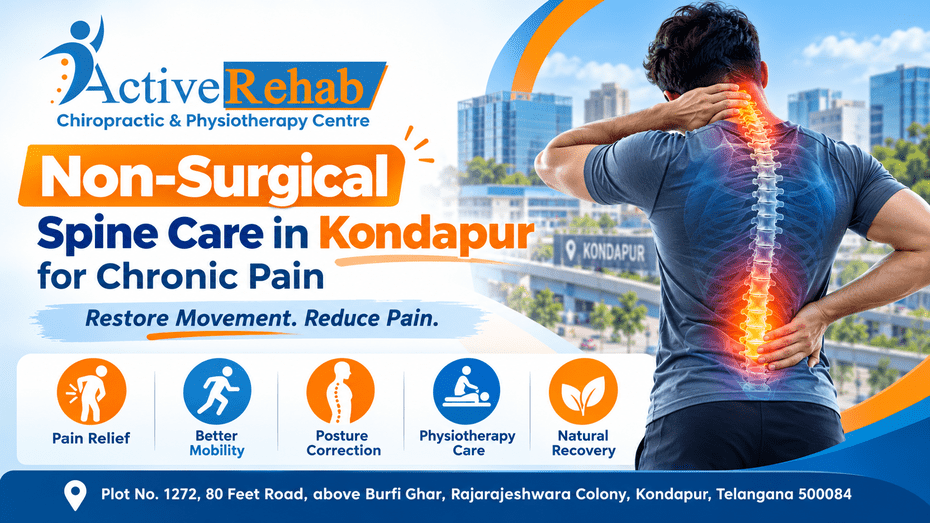
Chronic back pain, neck pain, and spinal stiffness can affect your ability to work, sleep, exercise, and enjoy everyday activities. When pain continues for weeks or months, temporary relief alone may not be enough. Understanding the possible cause of your symptoms and developing a personalized treatment plan can help you manage the condition more effectively.
If you are searching for non-surgical spine care in Kondapur for chronic pain, conservative treatment options may include physiotherapy, appropriate manual therapy, chiropractic care, therapeutic exercises, and lifestyle modifications. The right approach depends on your diagnosis, symptoms, medical history, and functional limitations.
At ActiveRehab Chiropractic & Physiotherapy Centre, Kondapur, treatment focuses on assessing individual needs and selecting appropriate care to help improve movement, function, and daily activity.
What Is Non-Surgical Spine Care?
Non-surgical spine care involves approaches designed to manage certain spinal and musculoskeletal conditions without an operation.
Depending on the cause of your pain, a treatment plan may include:
- Chiropractic care when clinically appropriate
- Physiotherapy and rehabilitation
- Therapeutic mobility and strengthening exercises
- Posture and ergonomic guidance
- Manual therapy and soft-tissue techniques
- Advice on physical activity and daily movement
Non-surgical treatment is suitable for many, but not all, spinal conditions. A proper assessment helps determine whether conservative care is appropriate or whether further medical investigation is needed.
What Causes Chronic Spine Pain?
Chronic spine pain can develop for several reasons. Identifying contributing factors is important because different conditions require different treatment strategies.
1. Prolonged Sitting and Desk Work
Office workers who spend long hours at computers may experience recurring lower back pain, neck stiffness, and upper-back discomfort. Remaining in one position for extended periods can aggravate symptoms.
2. Muscle Strain and Reduced Strength
Muscle strain, reduced physical conditioning, and limited movement may contribute to discomfort and difficulty performing everyday activities.
3. Disc-Related Problems
Bulging or herniated discs may cause back pain and, in some cases, pain radiating into the buttock or leg. Treatment depends on symptom severity and whether nerves are affected.
4. Age-Related Spinal Changes
Degenerative changes in the spinal joints and discs are common as people age. However, imaging findings do not always explain the symptoms, so clinical assessment remains important.
5. Previous Injuries
Sports injuries, falls, lifting injuries, and other physical trauma can contribute to persistent spinal symptoms.
6. Limited Physical Activity
Reduced activity can affect muscle strength, mobility, and tolerance for daily tasks. A gradual, appropriate exercise programme may help restore physical capacity.
When Should You Consider Non-Surgical Spine Treatment?
You may benefit from an assessment if you experience:
- Recurring lower back pain
- Persistent neck or upper-back discomfort
- Spinal stiffness
- Pain after prolonged sitting
- Difficulty bending or turning
- Back pain that interferes with work or sleep
- Pain extending into the buttock or leg
- Reduced ability to exercise or perform daily activities
Persistent pain should not automatically be attributed to poor posture or spinal misalignment. A healthcare professional can assess your symptoms and identify whether additional investigation is necessary.
What to Expect During Your First Spine Care Consultation
At ActiveRehab, the first step should be understanding your condition before selecting a treatment approach.
Detailed Symptom Assessment
Your practitioner may ask about the location and duration of your pain, previous injuries, daily activities, earlier treatments, and any associated numbness, tingling, or weakness.
Physical Examination
Depending on your symptoms, the assessment may include:
- Spinal and joint mobility
- Muscle strength and flexibility
- Posture and functional movement
- Hip and shoulder movement where relevant
- Neurological screening when indicated
Your medical history and examination findings help determine which treatment options may be suitable.
Individualized Treatment Plan
Your plan may combine hands-on treatment, exercise, rehabilitation, and activity modification. Progress should be reviewed regularly, and treatment should be adjusted according to your response.
Chiropractic Care for Chronic Spine Pain
Chiropractic care uses manual techniques, including specific joint adjustments, to address selected musculoskeletal conditions.
For some people with back pain, appropriate manual therapy may provide short-term improvements in pain and mobility. It is generally best considered as one possible component of a broader management plan rather than a stand-alone solution.
At ActiveRehab, chiropractic techniques should be selected according to the patient’s assessment, medical history, and tolerance.
Chiropractic treatment should not be described as physically putting every spine back into place or guaranteeing the removal of disc problems.
Physiotherapy for Long-Term Spine Health
Physiotherapy can help people with chronic spine pain improve movement, strength, and functional capacity.
Depending on the individual’s condition, rehabilitation may include:
Mobility Exercises
Gentle, appropriate movements can help maintain or improve spinal and hip mobility.
Strengthening Exercises
Progressive exercises may help improve the strength and endurance needed for daily activities.
Movement-Control Training
Learning to move comfortably during bending, lifting, walking, and other tasks can support a return to normal activity.
Functional Rehabilitation
Exercises can be tailored to your work requirements, sports participation, and everyday goals.
The programme should match your current ability and progress gradually rather than aggravating your symptoms.
Can Chronic Back Pain Be Managed Without Surgery?
Many people with chronic back pain can begin with conservative management, depending on the underlying diagnosis and clinical findings.
Treatment may involve exercise, physiotherapy, appropriate manual therapy, education, and changes to daily activity. Some conditions, however, require specialist assessment or surgical treatment.
A disc bulge or degenerative finding on an MRI does not automatically mean surgery is necessary. Equally, the presence of severe neurological symptoms should never be ignored in favour of routine conservative treatment.
The decision should be based on a proper clinical assessment and, when needed, consultation with an appropriate medical specialist.
Non-Surgical Spine Care for IT Professionals in Kondapur
Long hours at a computer can make it difficult to maintain regular movement throughout the working day. Professionals in Kondapur and nearby areas may experience recurring neck, shoulder, and lower back discomfort associated with prolonged sitting and work demands.
Practical strategies may include:
- Taking regular movement breaks
- Adjusting your chair, desk, and screen position
- Alternating between sitting and standing when practical
- Maintaining regular physical activity
- Following appropriate strengthening exercises
- Avoiding sudden increases in exercise or lifting loads
There is no single perfect posture that everyone must maintain. Regularly changing position and building strength and movement tolerance are often more practical goals.
How Long Does Chronic Spine Pain Treatment Take?
There is no universal treatment duration for chronic spine pain.
Progress depends on the underlying condition, duration and severity of symptoms, general health, daily activity, and response to treatment.
Some people notice changes relatively early, while others need a longer rehabilitation programme. Your practitioner should explain the expected goals, review progress, and reconsider the approach if improvement is limited.
Be cautious of anyone promising guaranteed results or a fixed recovery time before assessing your condition.
When Is Medical or Surgical Evaluation Necessary?
Non-surgical care is not appropriate for every spinal problem. Seek urgent medical attention if you develop:
- New loss of bladder or bowel control
- Numbness around the groin or saddle region
- Severe or rapidly worsening leg weakness
- Significant neurological changes
- Severe spinal pain after major trauma
Prompt medical evaluation is also important for persistent pain accompanied by fever, unexplained weight loss, or other concerning symptoms.
If conservative treatment is not helping or neurological symptoms are progressing, a medical specialist may recommend further investigation and discuss additional treatment options, including surgery when indicated.
Why Choose ActiveRehab for Non-Surgical Spine Care in Kondapur?
ActiveRehab Chiropractic & Physiotherapy Centre provides chiropractic and physiotherapy services in Kondapur, Hyderabad. Treatment options include chiropractic care, physiotherapy, posture correction, and rehabilitation, selected according to individual needs.
The clinic is led by Dr. Ashok P. Kota and focuses on assessing symptoms, discussing treatment options, and supporting patients with appropriate rehabilitation strategies.
Clinic address:
ActiveRehab Chiropractic & Physiotherapy Centre
Plot No. 1272, 80 Feet Road, above Burfi Ghar, Rajarajeshwara Colony, Kondapur, Hyderabad, Telangana 500084.
Phone: +91 9000229040
Website: https://activerehab.in/
Frequently Asked Questions
Can chronic spine pain be treated without surgery?
Many cases can initially be managed with conservative approaches, such as physiotherapy, exercise, education, and appropriate manual therapy. Suitability depends on the diagnosis and clinical findings.
Is chiropractic care suitable for chronic back pain?
Chiropractic care may be an option for some people with musculoskeletal back pain. A professional assessment is necessary to determine whether specific techniques are appropriate.
Can physiotherapy help with a disc bulge?
Physiotherapy may help improve movement, strength, and function in some people with disc-related symptoms. Treatment should be tailored to the individual’s symptoms and neurological findings.
Do I need an MRI before starting spine treatment?
Not everyone with back or neck pain requires an MRI. Imaging decisions depend on your medical history, examination findings, symptoms, and whether a serious underlying condition is suspected.
Can I continue working while receiving spine treatment?
Many people can continue working while managing spine pain, although temporary modifications to activity or workstation setup may be helpful. Advice should be based on your symptoms and functional ability.
When should I consider surgery?
Surgery may be considered for certain conditions when there is significant or progressive neurological impairment, a specific structural problem requiring surgery, or persistent symptoms despite appropriate conservative treatment. The decision should be made with a qualified medical specialist.
Conclusion
Living with chronic spine pain can affect your work, sleep, mobility, and quality of life. Although surgery is necessary for some conditions, many people can explore conservative care before considering an operation.
If you are looking for non-surgical spine care in Kondapur for chronic pain, start with a proper assessment to understand your symptoms and identify suitable options. A personalized plan may include chiropractic care, physiotherapy, exercise-based rehabilitation, and practical lifestyle modifications.
At ActiveRehab Chiropractic & Physiotherapy Centre in Kondapur, the focus is on appropriate assessment, individualized care, and helping patients improve their movement and daily function.


